

How does a battery energy storage system work? It stores electricity in rechargeable batteries when generation exceeds demand or energy costs are lower. The system converts incoming AC electricity into DC power for storage and reverses the process when electricity is required by the grid or connected loads.
How does a battery energy storage system work? Its operation is managed through batteries, a Power Conversion System and control equipment that regulate charging and discharging cycles. In grid-scale and medium-voltage applications, a BESS transformer connects the system to the grid, supports bidirectional energy flow and adapts voltage levels.
Core Components of a Battery Energy Storage System
A battery energy storage system combines battery modules, power conversion equipment, control software and electrical protection components. Many systems use lithium-ion batteries because of their high energy density, fast response and ability to complete repeated charging and discharging cycles. The required battery capacity depends on the load profile, discharge duration and intended application.
The battery management system monitors cell voltage, temperature, current and state of charge. It helps keep battery modules within defined operating limits and identifies abnormal conditions. A Power Conversion System converts AC electricity into DC power during charging and reverses this process during discharge.
The main BESS components include:
- Battery modules configured to store a large amount of energy, depending on system capacity
- Power Conversion System for bidirectional AC–DC conversion
- Thermal management equipment for temperature control
- Energy Management System for operational scheduling
- Protection devices, switchgear and monitoring equipment
- A transformer that connects the system to the power grid
Energy storage systems can receive electricity from conventional generation or renewable energy sources such as solar and wind. Depending on system design, stored electricity may be used for backup power, frequency support or peak shaving. The BESS transformer adapts the output of the Power Conversion System to the required grid voltage and must withstand switching events, harmonic loads and repeated operating cycles.
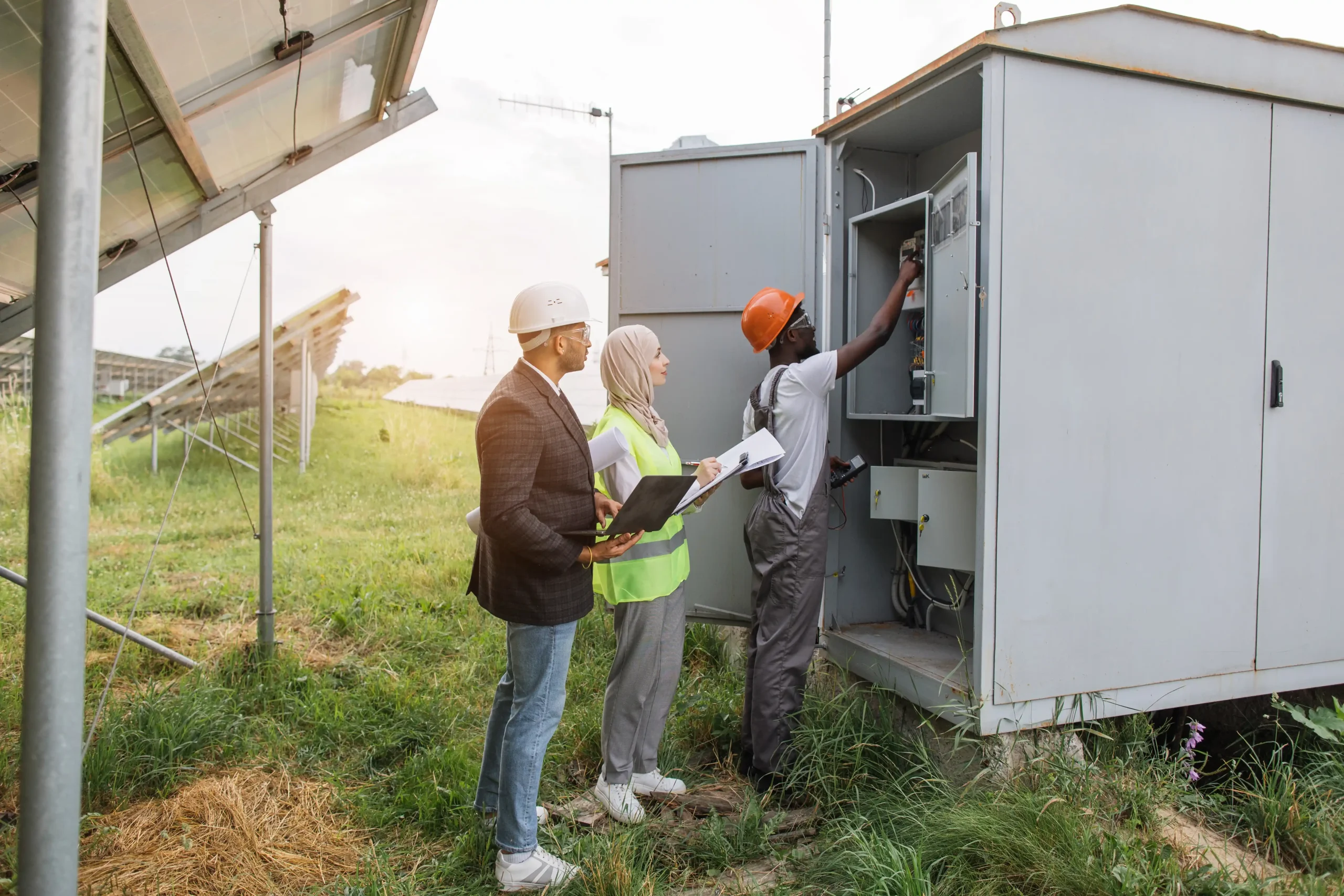
The Step-by-Step Charging and Discharging Process
Battery energy storage systems follow a controlled cycle to store electricity and return it when required. In large-scale applications, this process helps balance production with changing energy demand. The operation of energy storage systems BESS can be summarized in the following steps:
- Electricity enters the battery storage system from the grid or a generation source.
- The Power Conversion System converts AC electricity into DC power.
- The rechargeable battery stores the converted electricity as chemical energy.
- Control equipment monitors voltage, temperature and state of charge.
- When demand rises, stored energy is converted from DC back into AC.
- A transformer adjusts the voltage before electricity reaches the grid or connected loads.
The charge-discharge cycle is coordinated by battery and energy management systems. These controls manage energy according to operating limits, electricity demand and scheduled system functions. Understanding how energy storage systems work also requires considering the transformer, switchgear, thermal controls and protection equipment.
The selected storage technology affects response time, discharge duration, capacity and operating conditions. The benefits of battery storage may include peak shaving, backup supply and renewable energy integration. Depending on the electricity market, operators may also develop revenue streams through grid-support services and energy-price management.
Contact TEK Transformatör to explore a project-specific BESS transformer designed for your system’s capacity, voltage and operating requirements.