

Types of transformers include dry-type, oil-immersed, step-up, step-down, isolation and distribution transformers. Each design performs a particular function based on voltage conversion, insulation method, cooling system, installation environment and network requirements. Some units are developed for standard power distribution, while others address specialized operating conditions. Their construction may also vary according to capacity, voltage class and installation location.
Types of transformers also vary according to their application in power grids, renewable energy plants, industrial facilities and infrastructure systems. Selecting the appropriate model requires evaluating power capacity, voltage ratio, load profile, environmental conditions and applicable technical standards. Project-specific designs may incorporate different winding configurations, cooling methods and monitoring systems. A detailed technical assessment helps determine the transformer configuration required for reliable operation.
Different Types of Transformers
Transformers are classified according to their function, construction, insulation method and operating environment. Although transformers work through electromagnetic induction, their configuration changes with capacity, application and voltage level. Alternating current in the primary winding creates magnetic flux, which passes through the core and induces voltage in the secondary winding.
Common transformer types include:
- Power transformers: Transfer electricity at high capacities within generation and transmission networks.
- Distribution transformer: Reduces medium voltage to levels required by local networks, commercial buildings and industrial facilities.
- Isolation transformer: Separates connected equipment from the supply circuit while transferring energy between independent windings.
- Single phase transformer: Serves lower-capacity residential, commercial and utility distribution applications.
- Air core transformer: Uses air instead of a ferromagnetic core and is generally selected for high-frequency electronic circuits.
Transformers can also be grouped as step-up, step-down, dry-type, oil-immersed, pad-mounted and pole-mounted units. Step-up transformers raise voltage for transmission or grid connection, while step-down units reduce it for distribution and end use. Dry-type models use solid insulation and air-based cooling. Oil-immersed models rely on insulating liquid for cooling and electrical insulation.
Selecting the appropriate design requires evaluating capacity, voltage ratio, load profile, cooling method, installation conditions and technical standards. Project-specific requirements may also determine winding configuration, enclosure design and monitoring options.
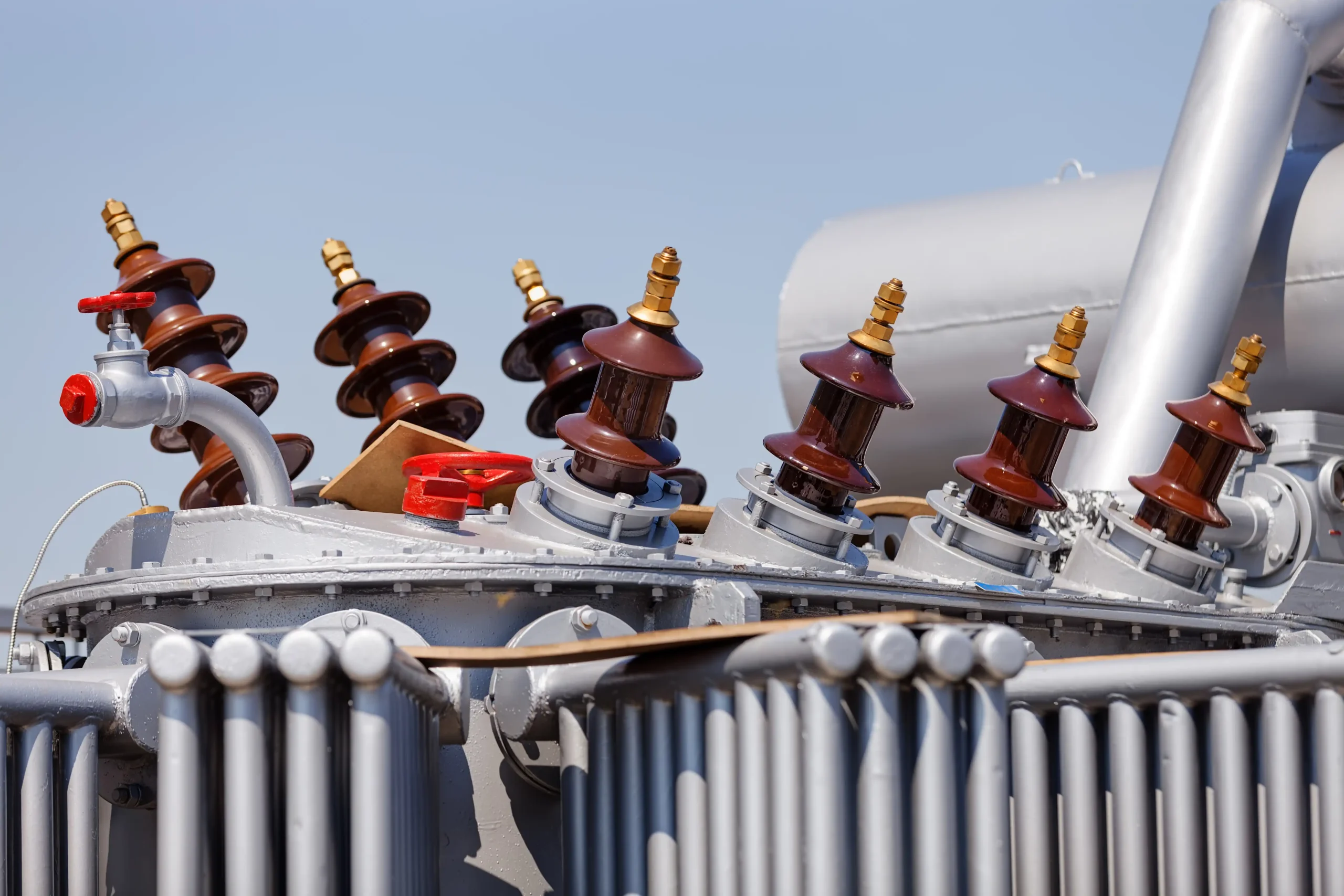
All Types of Transformers
Transformer classifications are based on voltage function, insulation method, phase arrangement, installation format and application. Every transformer transfers AC power through electromagnetic induction. Current in the primary winding creates changing flux within the magnetic core, inducing an output voltage in the secondary winding.
The relationship between the primary and secondary windings determines the voltage function:
- Step-up transformers increase voltage for transmission or grid connection.
- A step down transformer reduces voltage for distribution and end use.
- One-to-one transformers maintain approximately the same voltage while separating circuits.
Insulation and cooling methods form another classification. Dry type transformers use solid insulation and air-based cooling, while oil-immersed models use insulating liquid. Transformers may also be grouped as single-phase or three-phase units and as pad-mounted, pole-mounted or substation designs.
Although a transformer is sometimes called an electronic device, it is more accurately described as a static electrical device. Each type of transformer based on voltage performs a specific conversion function within power systems. The phrase number of transformer based on voltage is grammatically incorrect; “transformer types based on voltage transformation” should be used instead. Selection depends on capacity, voltage ratio, load characteristics, installation conditions and applicable standards.
Contact TEK Transformatör to identify the transformer type suited to your project’s voltage, capacity and operating requirements.